What bright-source artifacts are telling you
A night vision image is not a direct copy of the scene in front of the lens. It is the result of light being collected, amplified or electronically processed, and displayed within a limited range. When a bright source enters that range, the image may show blooming, halo, streaking, glare, or a temporary loss of detail. These effects are often discussed as though they were interchangeable. They are not.
Bright-source artifacts are useful clues. They can show how much of the image is being driven beyond its normal working level, how the system handles that excess, and how quickly detail returns afterward. A small light in a dark scene is also a demanding subject: the surrounding image may be nearly black while the source itself is far brighter than anything else in view.
The important question is not whether an artifact appears at all. Many healthy systems show some response to a strong light. The more useful questions are where the effect appears, whether it stays tied to the source, how long it lasts, and whether ordinary detail comes back once the source is removed.
Blooming: when bright detail spreads
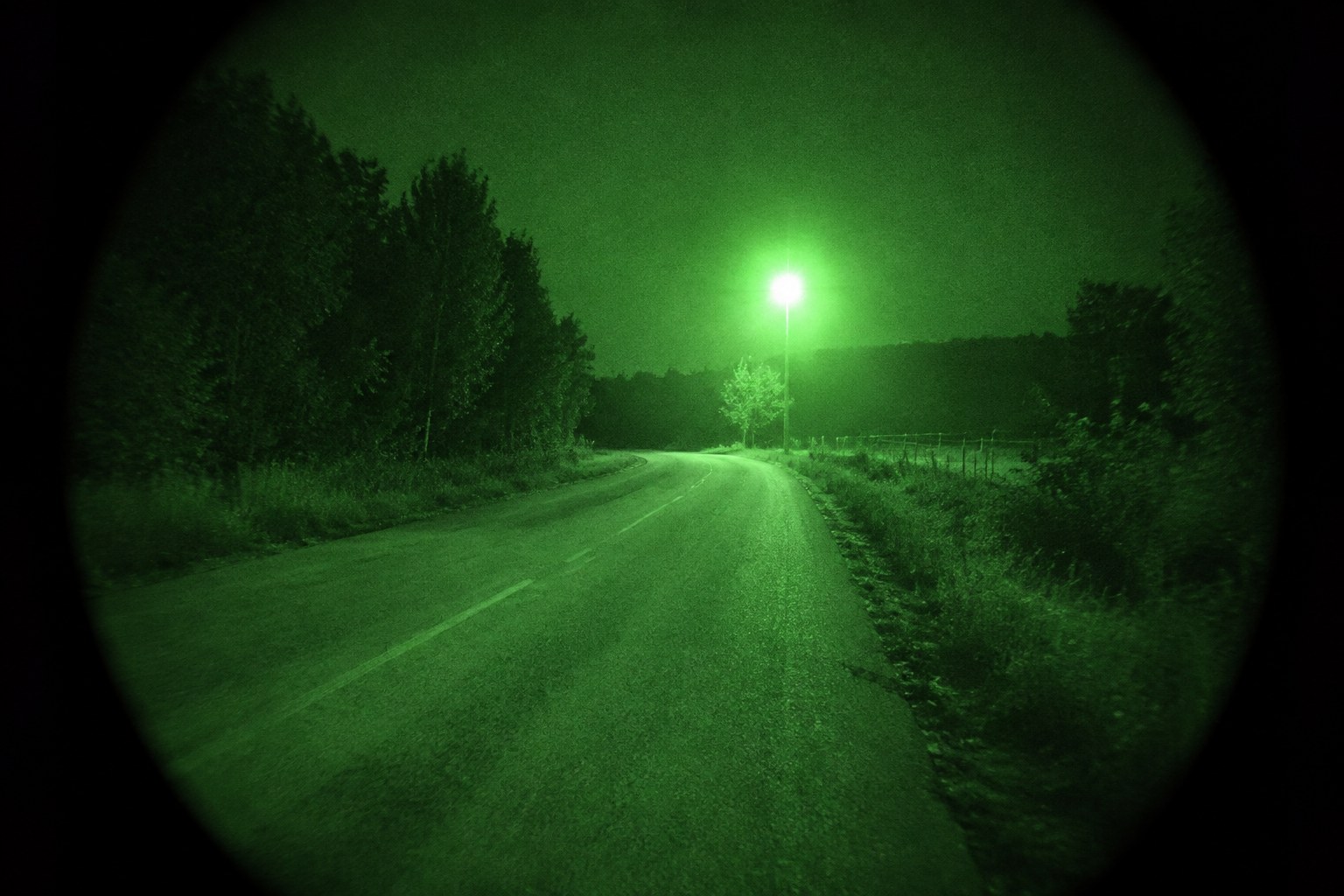
Blooming is the visible expansion of a bright area beyond its apparent boundaries. A small lamp, reflective point, or bright window may look larger than it really is, with a soft glow spreading into nearby parts of the image. In a conventional image sensor, this can be related to charge spilling between adjacent pixels. In an image-intensified system, the appearance can result from local over-response and the way the device limits or distributes excessive signal. The visual result is similar enough that the term is used broadly, but the underlying mechanism depends on the imaging architecture.
Blooming usually becomes easiest to see when a bright source is surrounded by a dark field. A distant light may appear to grow as the scene gets darker, not because the light has changed, but because the contrast makes the surrounding spread more obvious. Fine detail near the source can disappear under the expanded bright patch. The edge may be soft, uneven, or slightly colored, depending on the system and the source.
A brief bloom around a strong light is not, by itself, evidence of damage. It may simply indicate that the source is outside the image system’s comfortable range. The effect should be judged under comparable conditions rather than against an idealized image in which every light remains pin-sharp.
Halo: the ring around a source
A halo is a luminous ring, disk, or diffuse envelope surrounding a bright point or object. It is often more geometrically organized than blooming. Instead of the bright area merely spreading outward, the viewer may see a distinct circular boundary or a pale ring around the source. In some systems, the halo is associated with the internal behavior of an image intensifier when intense light produces secondary effects within the amplification process. Optical reflections, protective windows, filters, and other elements can also contribute to the appearance.
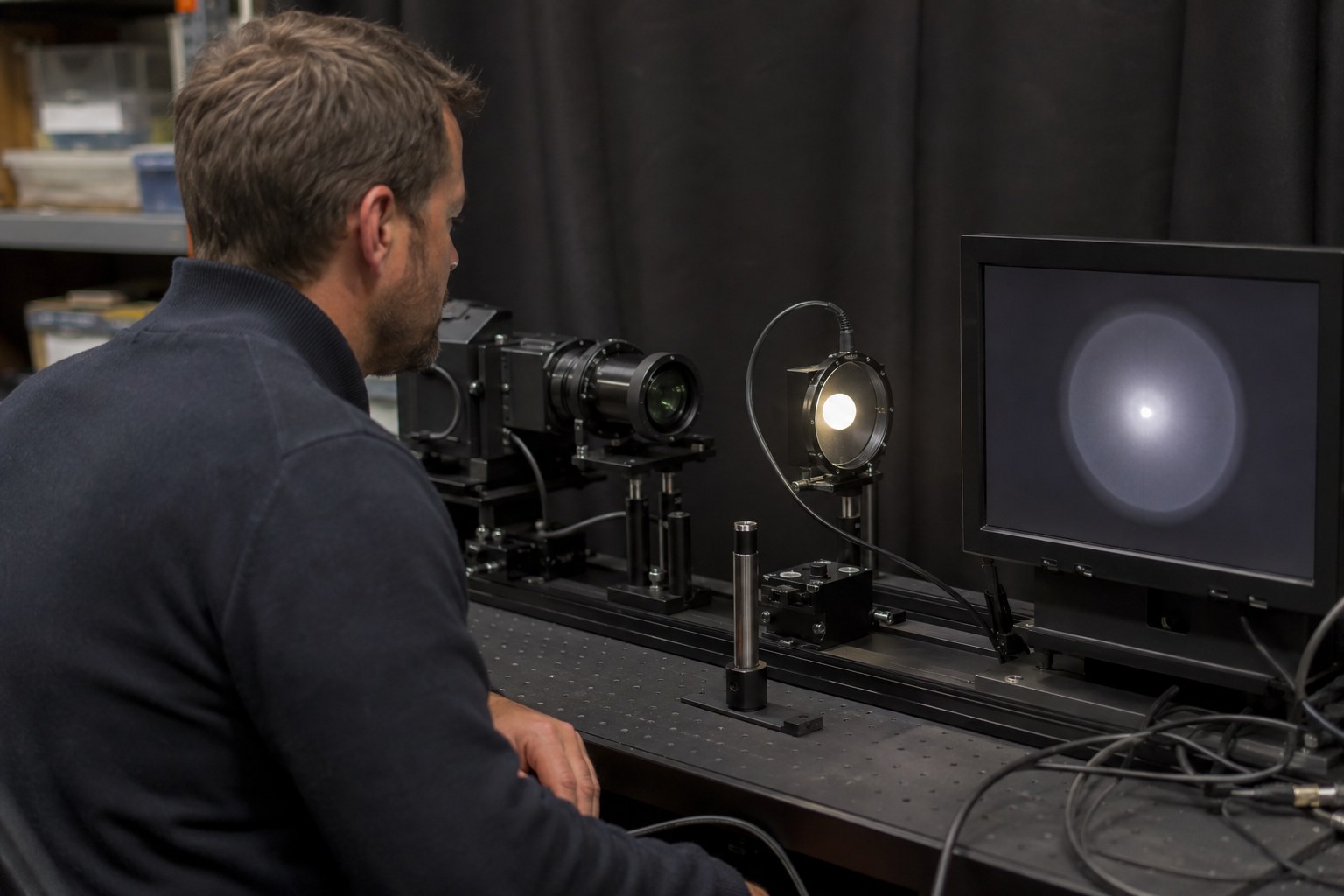
Halo size and clarity can change with source brightness, distance, focus, atmospheric conditions, and the position of the source in the field of view. A small, centered light may show a neat ring, while an off-axis light may produce an irregular glow or flare. A source that is slightly out of focus can make the halo harder to separate from ordinary blur.
Halo and blooming may occur together. The halo describes the ring or surrounding envelope; blooming describes the apparent enlargement or spread of the bright signal. In a real image, the two may overlap so thoroughly that assigning a single label is less useful than describing what is actually visible.
Other bright-source effects in the same scene
Bright sources can reveal artifacts that are neither simple blooming nor a classic halo. Vertical or horizontal streaks may extend from a light. Veiling glare can wash out a larger part of the image, reducing contrast without creating a clear ring. Ghost images or faint repeated shapes can result from reflections within the optical path. A bright source may also cause nearby shadows to lose texture, even when the source itself does not look especially large.
Atmosphere adds another layer. Moisture, dust, smoke, fog, and fine precipitation scatter light and can create a broad glow around lamps or reflective surfaces. In that situation, the scene may look hazy through several different imaging systems, including ordinary low-light cameras. The artifact is then partly environmental rather than a defect in the viewer.
Display behavior matters as well. Automatic gain or brightness controls may change the appearance of the whole image when a strong source enters the frame. The background may darken, brighten, or take on a different level of visible noise. This is not necessarily the same as local blooming, and it should not be interpreted without considering the entire frame.
Useful observations in ordinary scenes
Consider a single distant streetlamp against an otherwise dark background. If the lamp becomes a soft, enlarged patch while the surrounding scene remains recognizable, the system is showing a bright-source response. If a fairly even ring appears around it, halo is a reasonable description. If the ring is accompanied by broad loss of contrast across the image, glare or automatic adjustment may also be involved.
Now consider a small light passing briefly through the edge of the view. An artifact that remains centered on the source and changes as the source moves is usually easier to explain than a fixed mark that stays in one place. A short-lived smear or glow may be a response to the bright event. A stationary spot, line, or cloud that remains after the light is gone deserves closer attention, especially if it appears in scenes with no bright source.
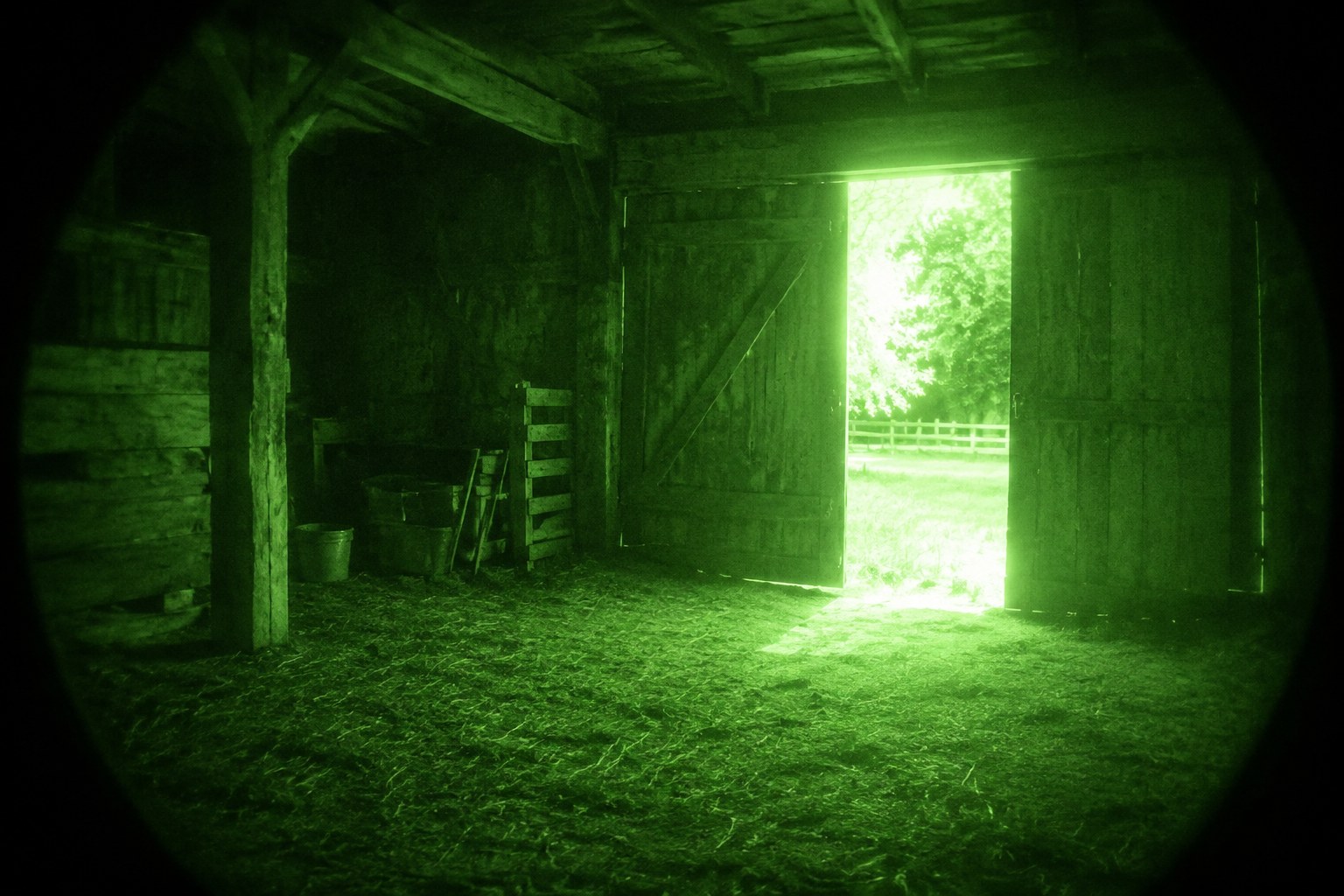
Another useful comparison is detail recovery. After the bright source leaves the frame, ordinary dark areas should generally become visible again as the system settles. Recovery may not be instantaneous, and the exact appearance can depend on the device and its controls. What matters is whether the image returns toward its previous condition rather than remaining persistently washed out or marked.
What is normal, and where caution begins
There is no universal boundary that separates an acceptable artifact from a fault. Different imaging designs respond differently, and a source that is moderate to one system may be extreme to another. A small halo, brief blooming, or momentary contrast reduction around a very bright light can fall within normal operation. So can a change in visible noise while the system adjusts to a sudden shift in illumination.
Caution is warranted when an effect appears without a bright stimulus, occurs in the same fixed location across unrelated scenes, or leaves persistent spots, lines, shadows, or discoloration. Noticeable changes in performance over time also matter. If a formerly clean image develops a lasting mark, if recovery becomes unusually slow, or if ordinary low-light scenes remain degraded after the source has gone, the observation should be recorded rather than explained away.
Repeated exposure to intense light can be stressful for some night vision equipment. A bright source should not be used as a deliberate test target at close range, and a night vision device should not be aimed at the sun or similarly intense sources. In safety-sensitive settings, the image should never be relied on as the sole indication that a scene is clear or safe.
When to stop and consult the manufacturer
Stop using the device for further bright-source observation if the image develops a persistent artifact, if the unit behaves differently after a strong exposure, or if there is any sign of physical damage, unusual heat, odor, or unstable operation. Do not open the housing or attempt an internal adjustment to chase a visual artifact. External cleaning, alignment, or repair advice that is suitable for one design may be harmful to another.
Before contacting the manufacturer or an authorized service provider, note the conditions in neutral terms: the type of source, whether it was moving or stationary, its position in the frame, the approximate duration of the effect, and whether the image recovered. If safe and permitted, an ordinary scene can be documented for comparison, but the device should not be subjected to another bright exposure merely to reproduce the problem.
Blooming and halo are therefore less like verdicts than small pieces of evidence. They show that a bright source has exceeded part of the system’s comfortable imaging range. Their meaning comes from context: the source, the surrounding scene, the artifact’s shape, and what remains after the light is gone.